In Colombia, a Pueblo Patrimonio — a patrimonial town — earns its designation not just for its buildings, but for something harder to quantify: the full character and spirit of daily life within them. History here isn’t behind glass. It’s in the faces of the people on the street, the hum of the workshops, the plazas alive with daily life — and, as it turns out, the gravel roads between them.
The Andes Made Them This Way
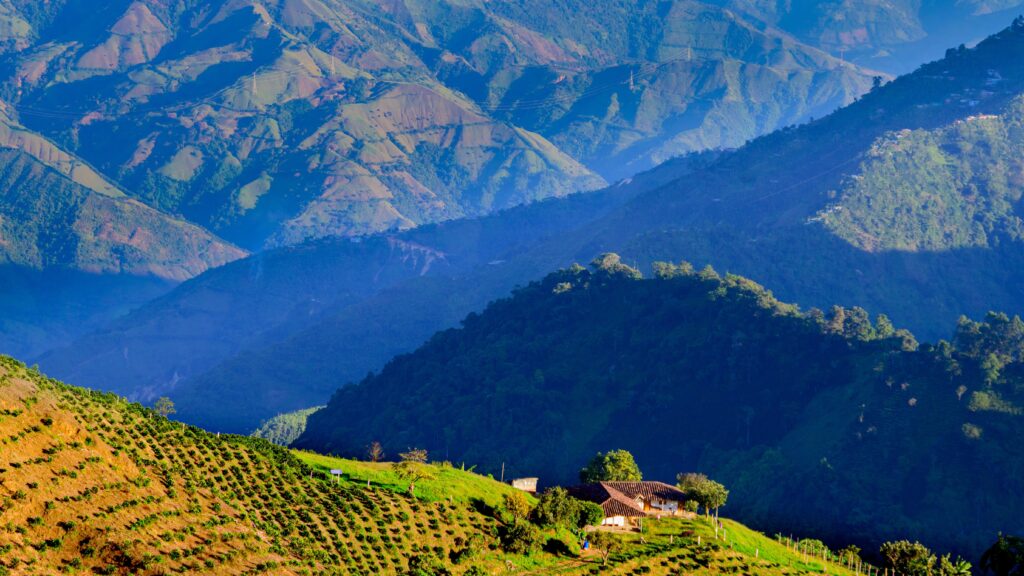
Antioquia is one of Colombia’s 32 departments, tucked into the dramatic Andean interior — misty peaks, fertile valleys, and the heart of the country’s legendary coffee country. During the 19th-century Antioqueño expansion, families pushed deep into these mountain valleys and built towns that bore both Spanish colonial influence and a stubbornly local craftsmanship. That pride of place never left.
Two of these towns anchor our rides: Jericó and Jardín — both holding the rare and treasured designation of Pueblo Patrimonio.
Jericó: Where You Arrive and Don't Want to Leave
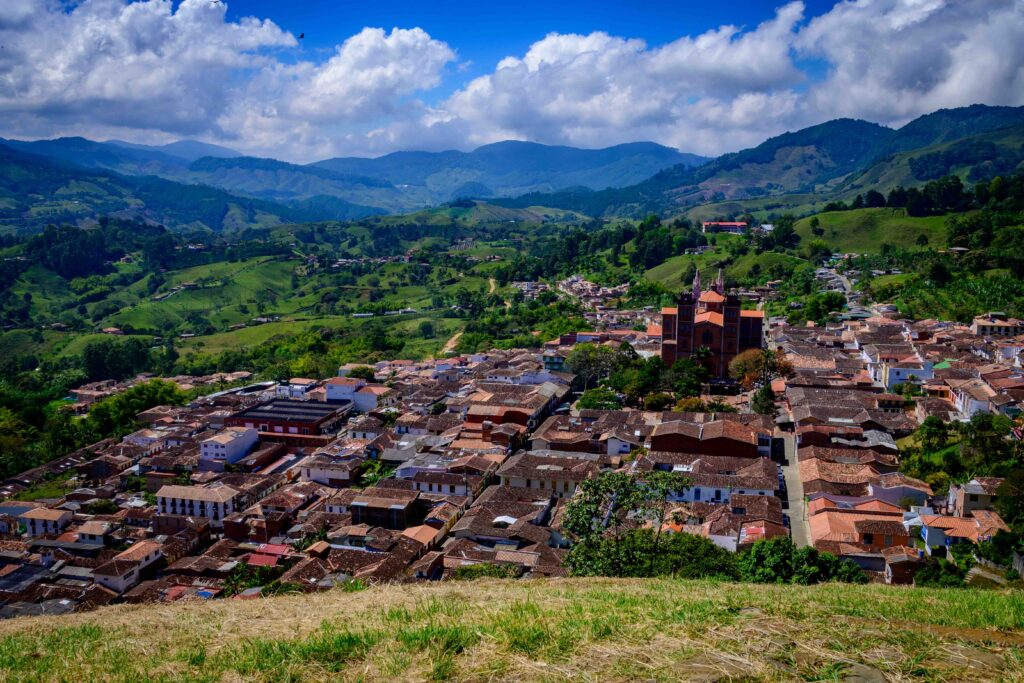
Jericó is our basecamp — where every Colombia Bicycle Adventures gravel tour begins and ends. The moment you roll in, it’s obvious why we fell in love with it.
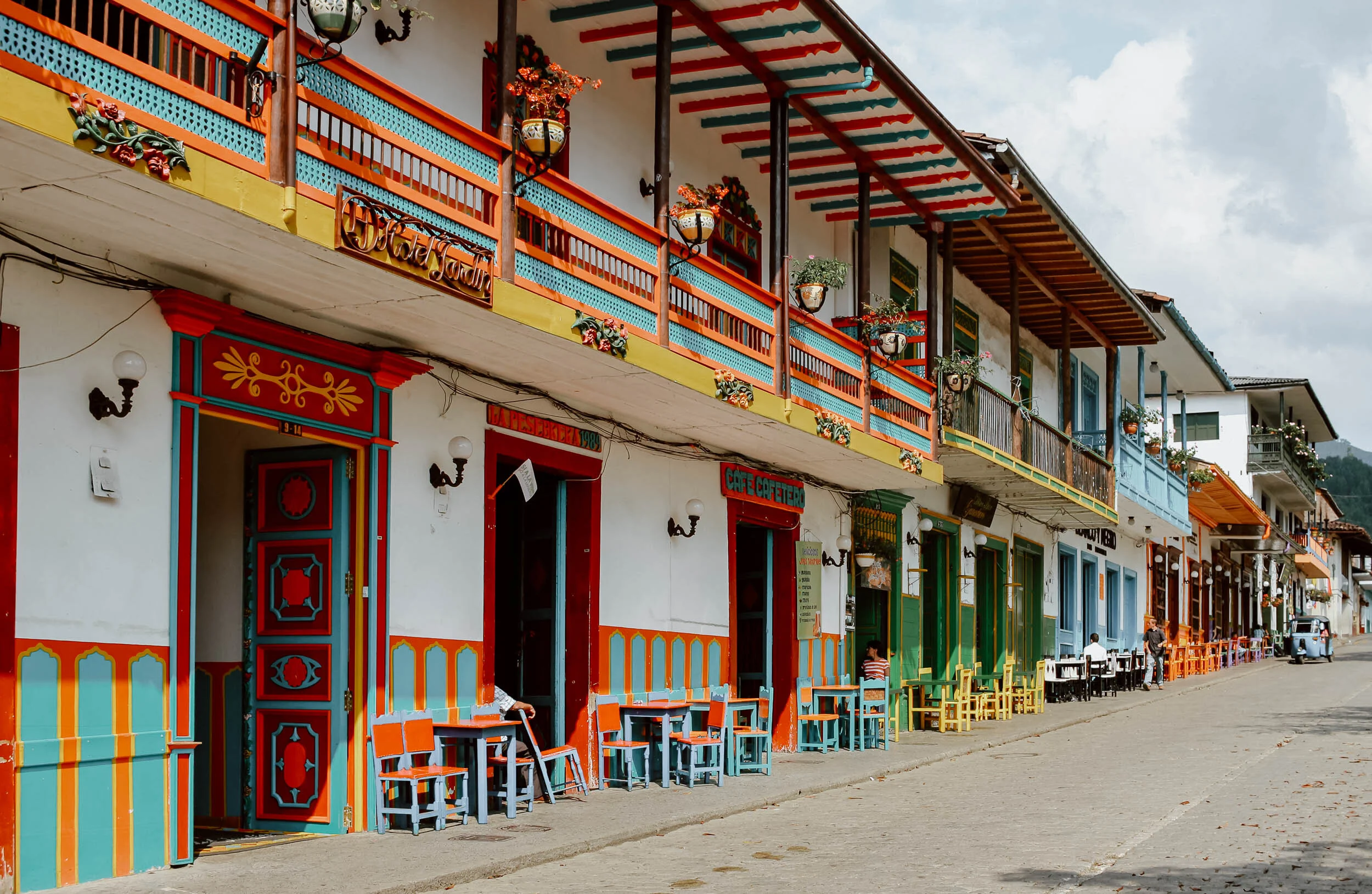
The architecture leans elegant: 19th-century republican facades, carefully preserved public buildings, streets that cling to steep hillsides and reveal unexpected views around every corner. But what the patrimonial designation really protects here goes deeper than stone and plaster. It protects a living culture.
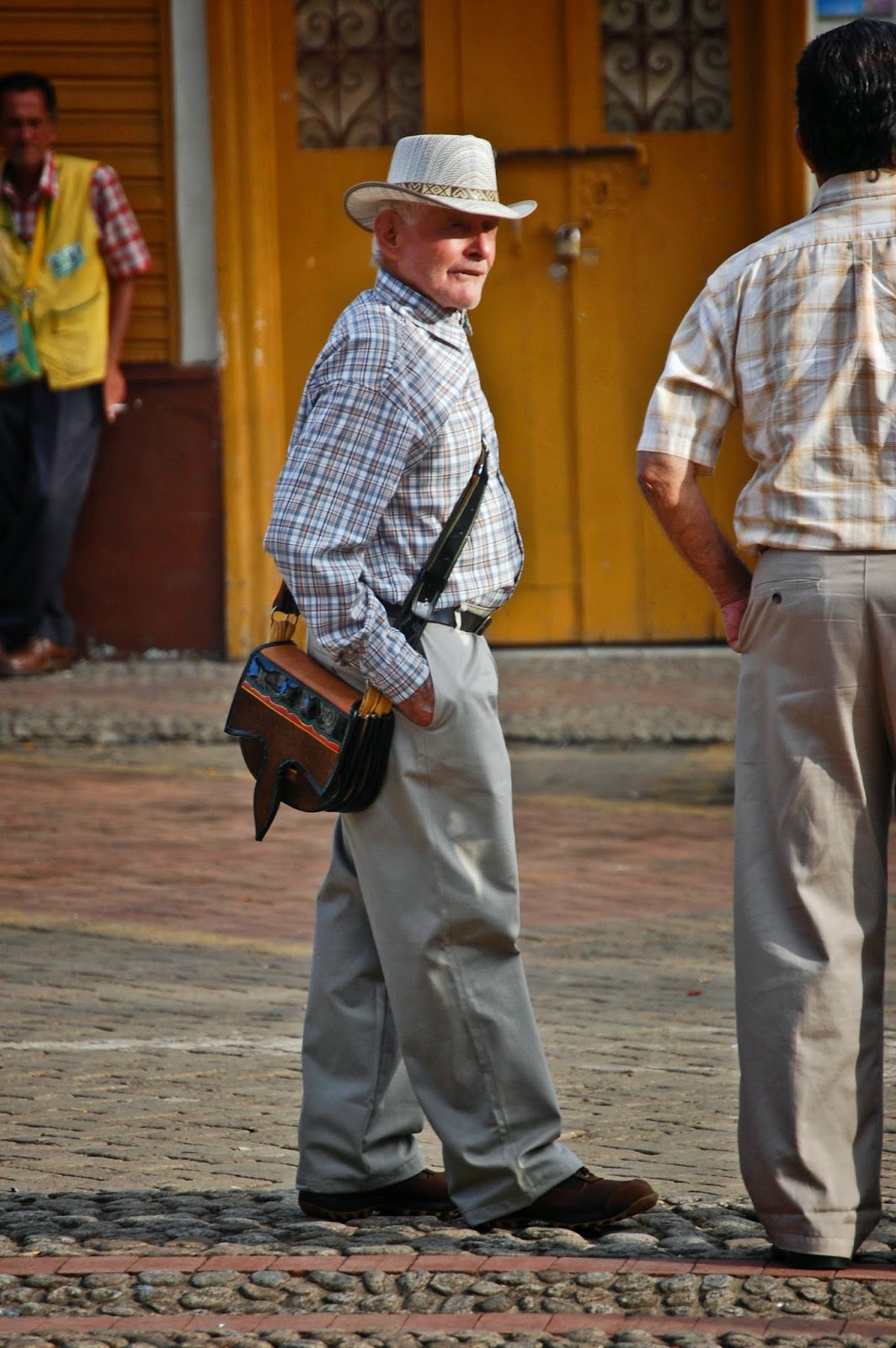
Nothing captures that more vividly than the carriel — the traditional leather satchel originally carried by arrieros, the mule drivers who were the lifeblood of these mountains long before roads existed. The carriel was their most essential companion: rugged enough for the terrain, personal enough to carry everything that mattered. Its exact origins are still debated, but its deep roots here are not. Jericó is the heart of this tradition today.
Walk through town and you’ll find family workshops where the craft is very much alive — each one with its own leathers, colors, and patterns, each one a tradition carried forward by living hands, curious eyes, and generous hearts.
Jardín: The Town That Stops You Mid-Pedal Stroke
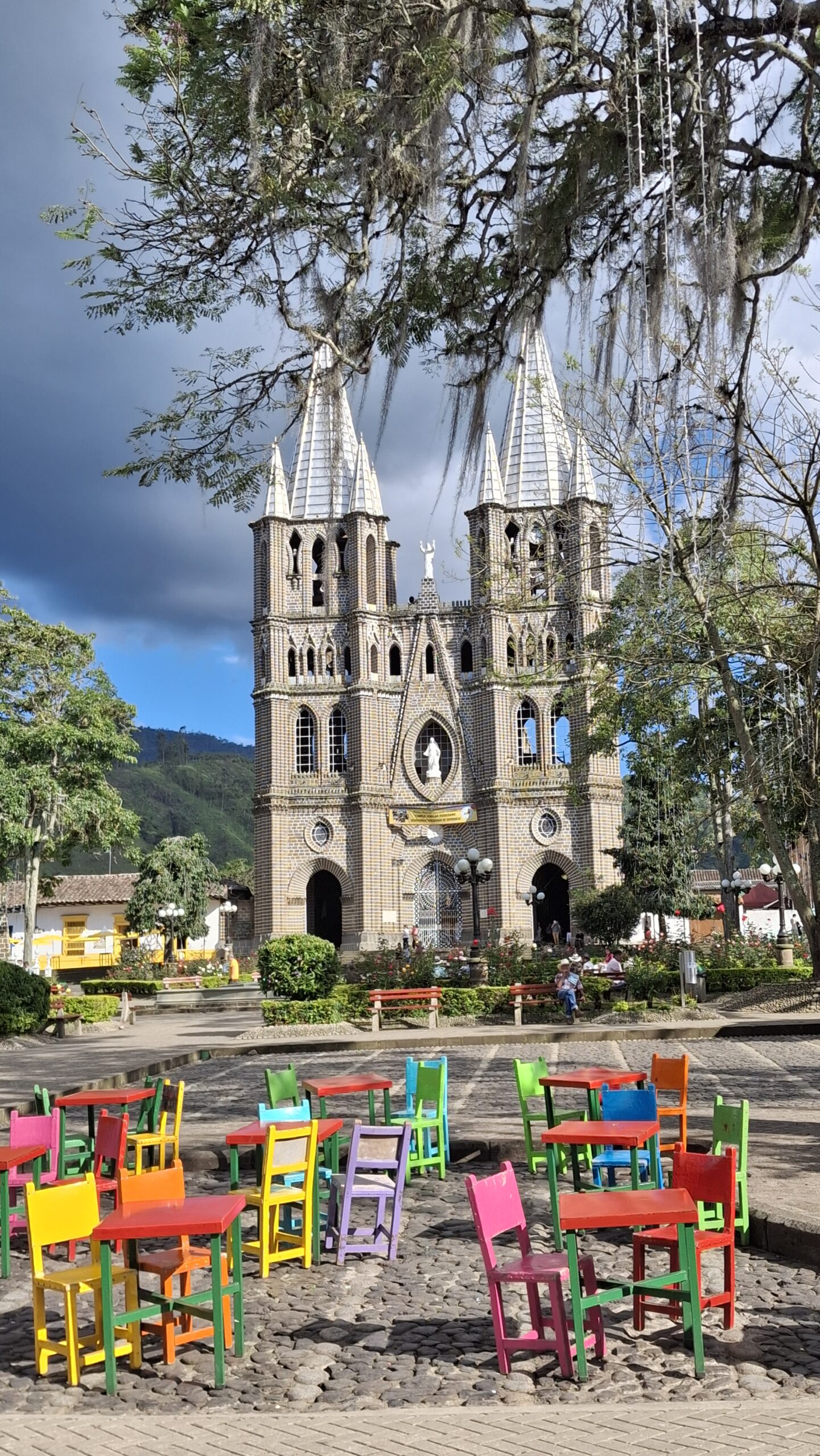
From Jericó, the roads climb and wind to Jardín — a slightly larger, well-traveled town whose vivid color palette of deep blues, emerald greens, and sunlit yellows feels like it was designed to lift your spirits after a long day in the saddle. At the center of it all stands the Basilica of the Immaculate Conception, a neo-Gothic masterpiece built entirely from hand-carved stone, declared a National Monument of Colombia in 1980. The plaza surrounding it is still the social heart of town — a place where life spills out daily, just as it has for generations.
Jardín is the first stop on our Tour del Café and El Grande trips, and it earns that place every time.
Coffee, Mule Trails, and the Roads We Now Ride
What quietly connects Jericó and Jardín and every other town along our bikepacking routes — and what shaped the entire character of this region — is coffee.
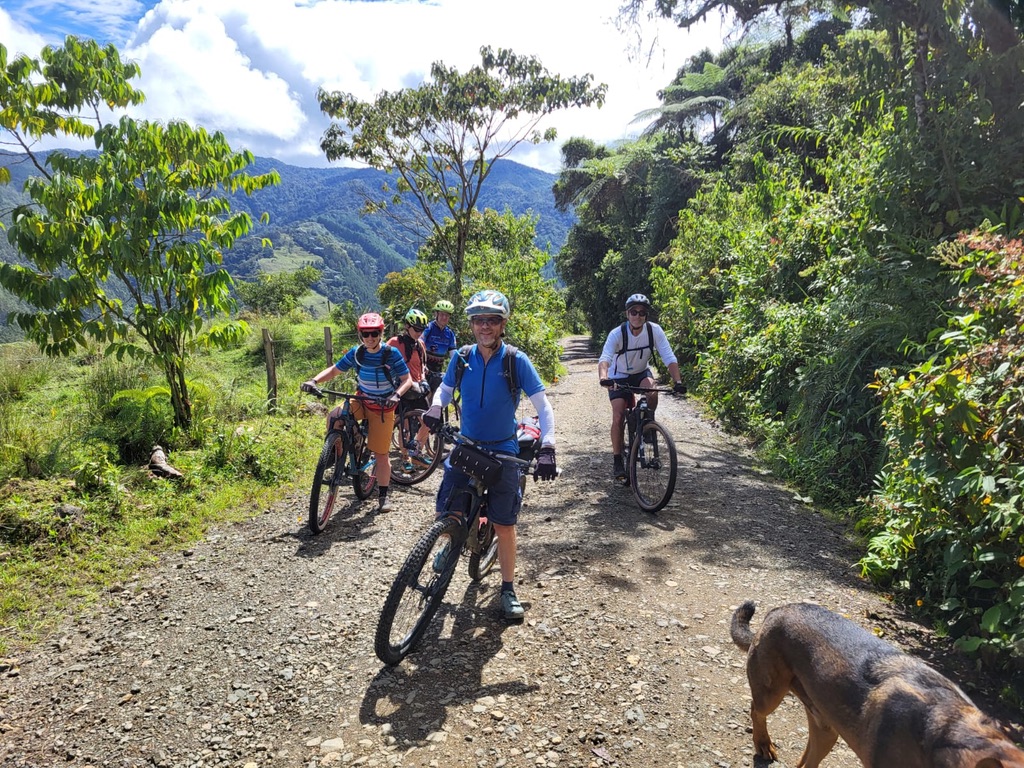
The same rugged terrain that makes our rides so spectacular also made large-scale farming impossible. What grew instead were countless small family farms scattered across the hillsides, each one dependent on the arrieros to carry their harvests along the mountain paths linking these communities together. Those routes still exist. We ride them.
The altitude, the mist, the family farms, the hand-carved cobblestones: all of it is still here, visible in the landscape, felt in every town along the way.
History You Can Actually Ride Through
We knew nothing about patrimonial towns, carriels, or coffee culture when we arrived in Jericó — sight unseen — in the summer of 2022. In those first months, we simply noticed the colorful architecture and the warmth of the people. The deeper history revealed itself slowly, layer by layer, the way Colombia has a habit of getting under your skin.
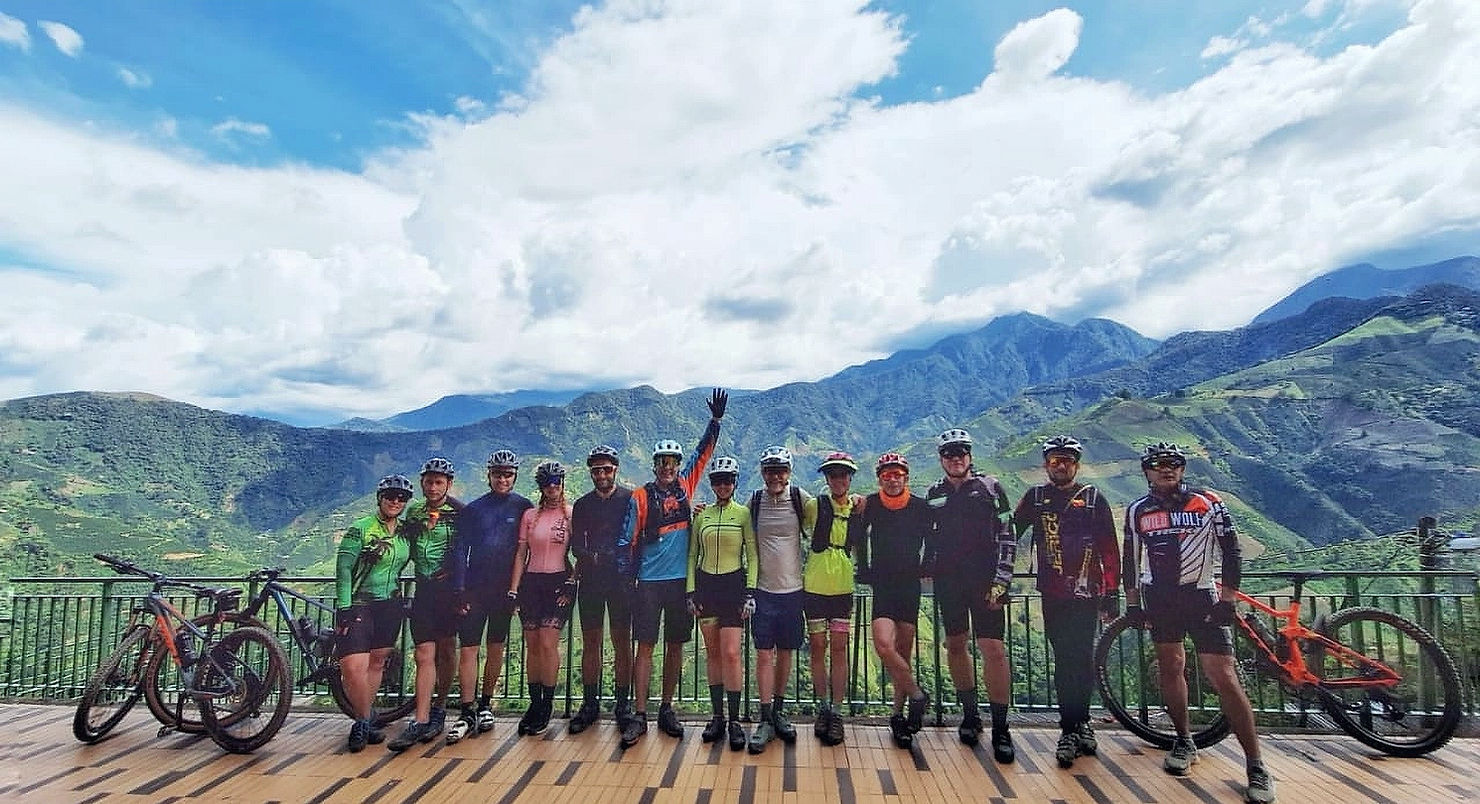
For our riders, the towns along these routes are far more than a place to shower and eat at the end of a day of riding. They’re the gems that hold these routes together — as much a part of the adventure as the riding itself. The chance to pedal into living history, to slow down on cobblestone streets, and to experience everything that makes a Colombia gravel bike tour unlike anything else.
The rides are incredible. The towns are unforgettable. There’s nothing quite like it.
[Explore our 2026 tours →]